Wildlife Conservation Society's Bronx Zoo Helps to Rescue Dozens of Birds Seized from Illegal Wildlife Pet Trade at U.S.-Mexico Border
WCS's Bronx Zoo has assisted with multiple parrot confiscations since 2022 involving over 50 birds of seven species, working with U.S. Fish and Wildlife Service to rehabilitate and place rescued wildlife.
Wildlife Conservation Society's Bronx Zoo Helps to Rescue Dozens of Birds Seized from Illegal Wildlife Pet Trade at U.S.-Mexico Border
Since April 2022, WCS's Bronx Zoo has assisted with several parrot confiscations involving more than 50 birds of seven species, including Endangered species
Rescued birds can be seen in the WCS Bronx Zoo's World of Birds
BRONX, NY, November 12, 2026, The Wildlife Conservation Society's Bronx Zoo recently helped to rescue dozens of parrots confiscated by the U.S. Fish and Wildlife Service (USFWS), the latest in an ongoing partnership to care for wildlife seized from illegal pet trade.
The birds, representing two species, are in very good health following veterinary examinations, and the zoo is helping ensure their continued care and appropriate long-term placement.
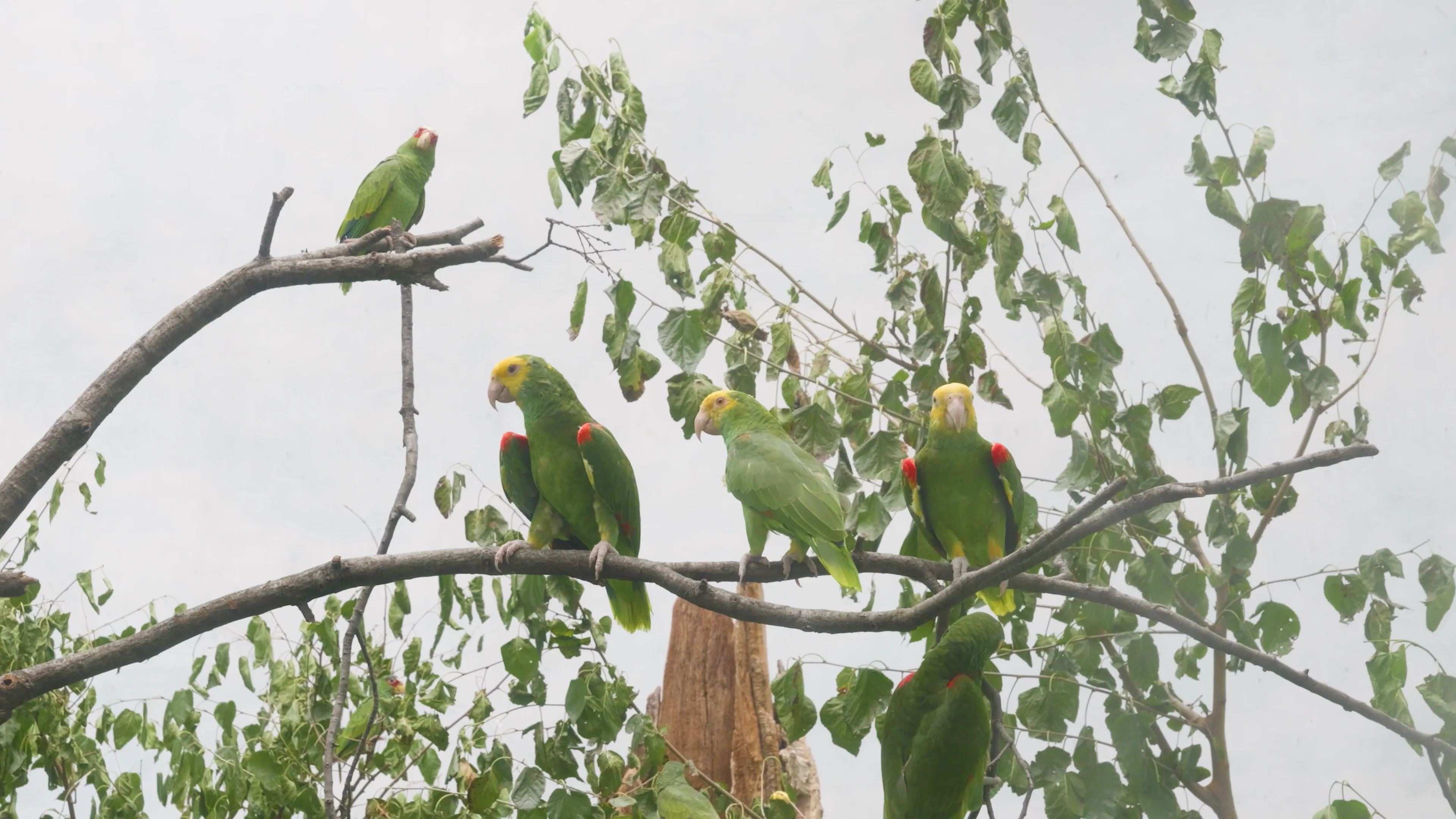
The dozens of birds include several white-fronted Amazons and orange-fronted conures.
Since 2022, the Bronx Zoo has assisted USFWS with nine parrot confiscations involving dozens of birds, representing seven species, including some species classified as Endangered. The zoo's veterinary and animal care teams assess the health of confiscated wildlife, provide medical treatment when needed, and help identify appropriate long-term homes for animals that cannot be returned to the wild.
"These animals were stolen from the wild and are victims of the illegal wildlife pet trade, and our responsibility is to give them the best possible chance for a healthy future," said Chuck Cerbini, WCS Bronx Zoo Curator of Ornithology. "Working with the U.S. Fish and Wildlife Service, our veterinary and animal care teams provide specialized expertise to assess, treat, and care for confiscated wildlife. This partnership reflects the important role that zoos can play in responding to wildlife trafficking and ensuring that rescued animals receive the care and appropriate homes they need."
The orange-fronted conures were received through three separate USFWS confiscations at the U.S.-Mexico border over the last 17 months. All the orange-fronted conures recently passed veterinary examinations and are in very good condition. They have been transferred to another Association of Zoos and Aquariums accredited zoo, where they will receive ongoing professional care.
Orange-fronted conures are classified as Vulnerable on the International Union for Conservation of Nature (IUCN) Red List of Threatened Species and are included in Appendix II of the Convention on International Trade in Endangered Species of Wild Fauna and Flora (CITES).
Native to the Pacific slope from western Mexico to Costa Rica, these parrots inhabit open woodlands, forest edges, and savannas. Once among the most abundant parrots in Central America, they disappeared from some areas of their former range. Illegal trapping for the pet trade is a major threat to their survival.
The WCS Bronx Zoo is also caring for over a dozen white-fronted Amazons, confiscated by USFWS at the U.S.-Mexico border within the last several months. These birds arrived in encouragingly good condition and have continued to do well under professional care.
Some of the white-fronted Amazons are currently in the Bronx Zoo's World of Birds, while others are being cared for at WCS's Central Park Zoo.
White-fronted Amazons are native to Mexico and Central America, extending into northwestern Costa Rica. Although classified as Least Concern by the IUCN, they are frequently trapped for international trade and are listed under CITES Appendix II. They are the smallest Amazon parrot and among the few parrot species in which males and females have visibly different plumage.
Across Latin America, parrots face the combined pressures of poaching and the loss of their forest habitat. In Guatemala's Maya Biosphere Reserve, a Wildlife Conservation Society team protects scarlet macaw nests and helps vulnerable chicks survive and return to the wild.
The Bronx Zoo's ongoing work with confiscated wildlife has also resulted in an encouraging development at its World of Birds.
This summer, two red-lored Amazons that arrived at the zoo through separate USFWS confiscations formed a breeding pair and successfully raised two chicks.
"Seeing two birds rescued from separate trafficking incidents successfully raise chicks is an encouraging outcome," said Cerbini. "It demonstrates the value of providing confiscated animals with appropriate veterinary care, a stable environment, and the opportunity to exhibit natural behaviors."
The illegal wildlife trade poses a serious threat to species populations around the world. Birds are particularly vulnerable to trafficking because of their demand for the pet and collector trade and animals captured and transported illegally can suffer injuries, illness, stress, and poor welfare conditions.
WCS works globally to prevent the illegal and unsustainable trade in wildlife, including parrots, protecting them in their habitats, disrupting trafficking flows, targeting consumer markets and advocating at the global policy level.
The Wildlife Conservation Society's Bronx Zoo's partnership with USFWS is part of WCS's broader commitment to combating wildlife trafficking and protecting threatened species.
Through its zoological parks and global conservation programs, WCS works to safeguard wildlife, support wildlife law enforcement, and address threats to biodiversity. The WCS Bronx Zoo contributes specialized veterinary expertise, animal husbandry, quarantine facilities, and long-term care capabilities to help federal authorities respond when live animals are seized.
The WCS Bronx Zoo recently announced another major effort to assist USFWS with confiscated wildlife. In August 2026, the zoo reported that it had helped rescue and rehabilitate more than 1,000 North American box turtles confiscated from the illegal wildlife trade since October 2024, as federal officials confronted what they described as an unprecedented surge in turtle trafficking. The vast majority of the turtles are believed to have been collected from the wild for the international pet trade. Confiscated turtles brought to the Bronx Zoo receive emergency triage care, veterinary treatment, quarantine, and rehabilitation.
Said Cerbini: "Together, these efforts demonstrate the essential role that zoos can play beyond their public exhibits: serving as resources for law enforcement agencies and providing a lifeline for wildlife affected by illegal trafficking."
The Wildlife Conservation Society's Bronx Zoo
The Wildlife Conservation Society's Bronx Zoo, located on 265 acres of hardwood forest in Bronx, NY, opened on Nov. 8, 1899. It is world-renowned for its leadership in the areas of animal welfare, husbandry, veterinary care, education, science and conservation. The zoo is accredited by the Association of Zoos and Aquariums (AZA) and is the flagship park of the Wildlife Conservation Society (WCS) which manages the world's largest network of urban wildlife parks including the Bronx Zoo, Central Park Zoo, Prospect Park Zoo, Queens Zoo and New York Aquarium. Our curators and animal care staff work to save, propagate, and sustain populations of threatened and endangered species. We have educated and inspired more than 400 million visitors at our zoos and aquarium since our opening and host approximately 4 million guests at our parks each year - including about a half-million students annually. The Bronx Zoo is the largest youth employer in the borough of the Bronx, providing opportunity and helping to transform lives in one of the most under-served communities in the nation. The Bronx Zoo is the subject of THE ZOO, a docu-series aired world-wide on Animal Planet.
Notes to editors
- Organisation
- Wildlife Conservation Society (WCS) Bronx Zoo
- Contact
- Mary Dixon / Nat Moss
- Telephone
Contact details are hidden from automated harvesters. Click to show them.