Study Finds Fingertips Hurt at 42°C in Millimeter-Wave Test
Researchers at Fujita Health University and Nagoya Institute of Technology found that 28 GHz millimeter-wave exposure triggers pain in human fingertips at an average skin temperature of 41.9°C, with females showing higher sensitivity.
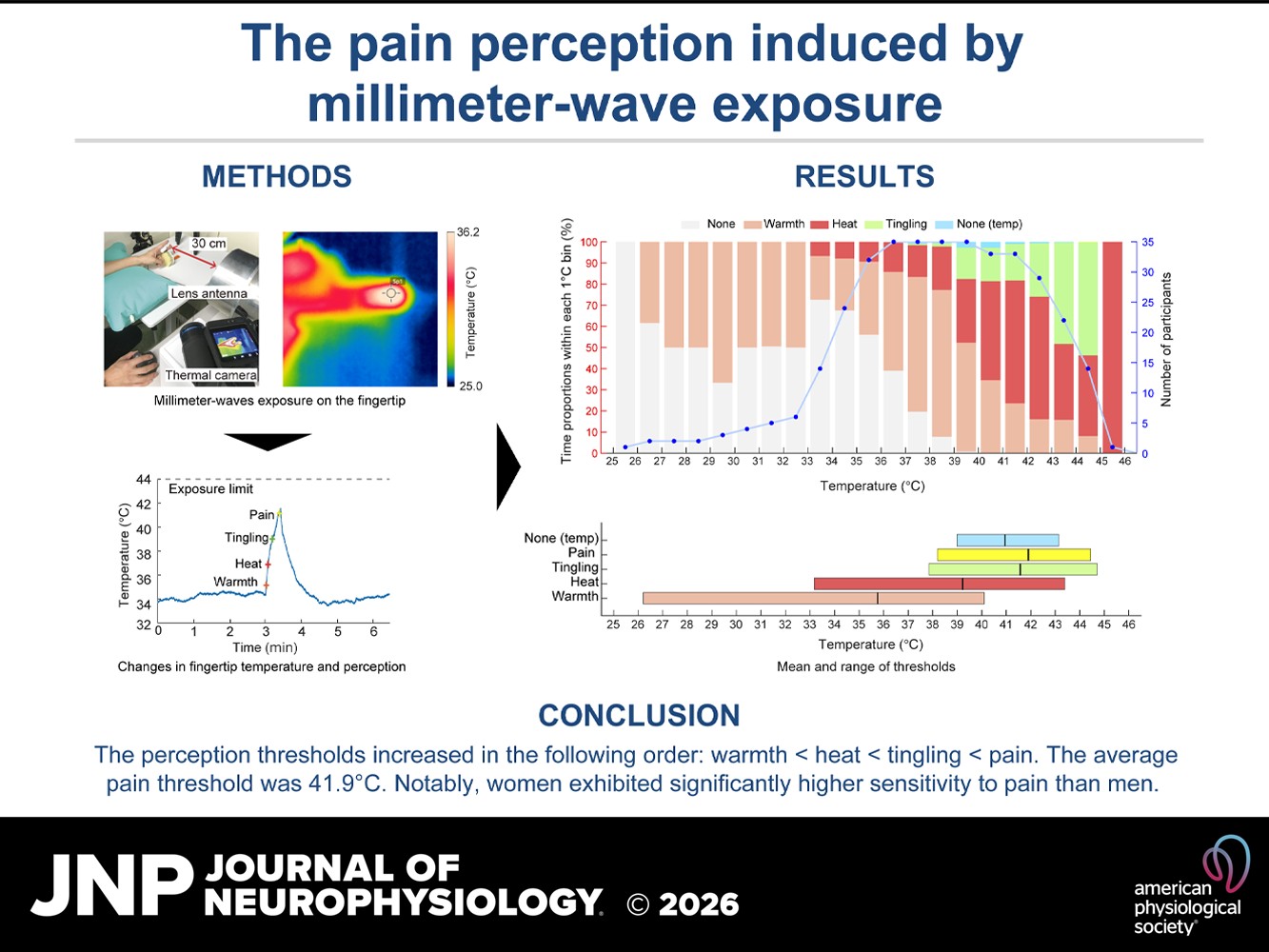
A new study from Fujita Health University and Nagoya Institute of Technology reveals the exact temperature at which millimeter waves, used in high-speed 5G and future wireless tech, begin to trigger pain on human skin.
As 5G and wireless networks expand, understanding human sensitivity to high-frequency signals is vital for safety standards. The research team exposed healthy adults to 28 GHz millimeter waves on their fingertips, tracking how sensations progressed as skin temperature rose, and uncovered distinct differences in pain thresholds across sexes.
STUDY DETAILS
Research question: At what skin temperature and through what sensory progression do millimeter-wave exposures induce pain, and how do individual physiological factors influence sensitivity?
Press Release Link: https://www.fujita-hu.ac.jp/news/vsfo8q20261118.html
Key findings:
- The 41.9°C Pain Threshold: Sensations progressed in a clear sequence from warmth to heat, tingling, and finally pain, with the average pain threshold occurring at precisely 41.9°C, supporting current international temperature safety limits.
- Higher Female Sensitivity: Females exhibited significantly higher pain sensitivity (4.80 times the odds of reporting pain), with physiological traits like total body water and finger size partly accounting for the difference.
What's new here: Beyond providing direct human experimental data to validate international safety guidelines for wireless communications, the study highlights that interindividual variability (such as sex and body composition) must be factored into future exposure safety standards.
Lead researcher Dr. Akiko Yuasa says, "As millimeter-wave technologies become increasingly widespread in future wireless communication systems, ensuring safe human exposure will become more important. Our finding that females were more sensitive to pain than males highlights the importance of considering interindividual variability when establishing safety factors..."
If this aligns with your coverage, I would be happy to share the full paper (https://doi.org/10.1152/jn.00554.2025), additional expert commentary, reference images, or arrange an interview with the research team
Notes to editors
- Organisation
- Fujita Health University / Nagoya Institute of Technology
- Contact
- Indrani Das
- Website
- https://www.fujita-hu.ac.jp/news/vsfo8q20261118.html
Contact details are hidden from automated harvesters. Click to show them.